News
(Advertisement)


Imperial College London Joins Theta’s Academic Network
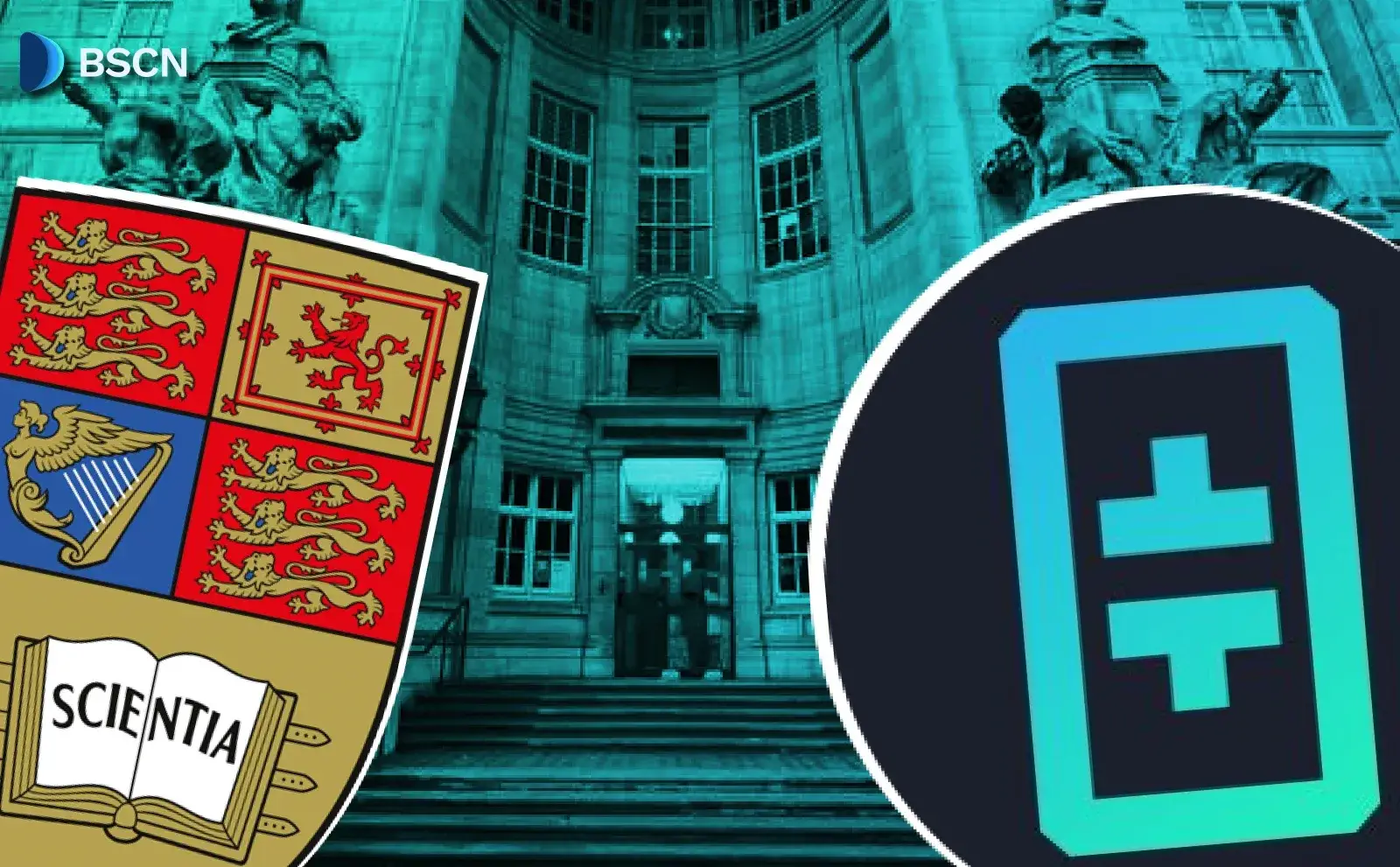
Imperial College London becomes Theta Network’s first European academic partner, using Theta EdgeCloud Hybrid for security and trustworthy AI research.

UC Hope
January 15, 2026

(Advertisement)
Table of Contents
Imperial College London has joined Theta Network's academic partner network, becoming the first university in the United Kingdom and Europe to adopt the Theta EdgeCloud Hybrid platform for security and trustworthy artificial intelligence research. The partnership directly addresses a central question in modern AI research: how leading universities can secure reliable, scalable compute infrastructure without relying exclusively on centralized cloud providers.
Announced on January 13, 2026, the collaboration focuses on adopting Theta EdgeCloud Hybrid by the Security & Machine Learning Lab within Imperial’s Department of Computing. Led by Dr. Sergio Maffeis, the lab will use the platform to support research in reinforcement learning security, foundation model robustness, and applied machine learning for real-world security challenges.
For Theta Network, the agreement represents a concrete expansion into Europe and a continuation of its strategy to support academic research with decentralized, hybrid GPU infrastructure.
Why Does This Partnership Matter for Theta Network’s Academic Expansion?
With Imperial College London joining its academic partner network, Theta Network expands its research institution network to include Stanford University, Syracuse University, Nanyang Technological University, and four of South Korea’s top five universities. Until this announcement, Theta’s academic presence had been concentrated in North America and Asia.
Today, Theta is announcing that @imperialcollege will be joining Theta EdgeCloud as our first U.K./European university partner.
— Theta Network (@Theta_Network) January 13, 2026
The Security & Machine Learning Lab will use our hybrid GPU infrastructure for cutting-edge AI security research. 🧵 pic.twitter.com/2sOpow3wkD
The addition of a leading European research university signals a deliberate effort to build a geographically balanced academic ecosystem. Rather than focusing solely on industry or commercial deployments, Theta has positioned its infrastructure as a resource for universities facing increasing pressure from GPU shortages, rising cloud costs, and limited on-premises capacity.
What Makes Imperial College London a Notable Addition?
Imperial College London is a public research university specializing in science, engineering, medicine, and business. Based in London, it is consistently ranked among the top universities worldwide and is widely recognized for the quality and impact of its research. In the QS World University Rankings 2025/2026, Imperial is ranked second globally and first in the United Kingdom for research quality.
Its Department of Computing has a strong international reputation in computer security, artificial intelligence, and systems research. Faculty and research groups regularly contribute to both foundational theory and applied systems work, often in collaboration with industry and public sector partners. The Security & Machine Learning Lab operates within this environment, focusing on the intersection of AI and security engineering.
How Does Imperial Fit Into Theta’s Wider Academic and Industry Ecosystem?
Imperial College London joins an academic network that spans multiple regions and research traditions. Beyond academia, Theta’s infrastructure is used by organizations in media, sports, esports, and AI development, all of which rely on similar technical capabilities for training and inference workloads.
While academic research differs from commercial deployments, both depend on reliable access to flexible compute infrastructure. The inclusion of a leading European university strengthens Theta’s position as a provider of infrastructure designed for sustained, real-world AI workloads rather than short-term experimentation.
Who Leads the Security & Machine Learning Lab and Why Does That Matter?
The Security & Machine Learning Lab is led by Dr. Sergio Maffeis, an Associate Professor in Computer Security at Imperial College London. Dr. Maffeis received his PhD from Imperial College London and an MSc from the University of Pisa. His research spans web security, formal methods, programming languages, and machine learning, with a sustained focus on adversarial machine learning and system robustness.
His work has been published in major peer-reviewed venues, including USENIX Security, the ACM Conference on Computer and Communications Security, the IEEE Symposium on Security and Privacy, AAAI, POPL, ISSTA, and RAID. These publications reflect long-term contributions across both theoretical and applied security research. Projects associated with the lab include automated vulnerability detection systems, adversarial analysis of intrusion detection models, and multi-agent approaches to security incident analysis.
The lab’s research agenda aligns closely with the technical demands of trustworthy AI research, which often requires repeated experimentation across heterogeneous compute environments.
How Does Theta EdgeCloud Hybrid Support Security and Trustworthy AI Research
The central technical element of the partnership is the adoption of Theta EdgeCloud Hybrid, a decentralized computing platform designed to support a wide range of AI workloads. For research groups such as the Security & Machine Learning Lab, the value lies in access to multiple compute resource classes within a single framework.
Theta EdgeCloud Hybrid provides access to community-run NVIDIA RTX 30, 40, and 50 series GPUs for prototyping and smaller-scale inference, enterprise-grade NVIDIA GPUs including A100, H100, and H200 models for large-scale training, and AWS AI accelerators such as Trainium and Inferentia for cost-efficient training and inference.
This hybrid design allows researchers to move between exploratory experimentation and computationally intensive training without rearchitecting workflows or switching platforms. For security research, where models are frequently tested under adversarial conditions, this flexibility reduces delays caused by fragmented or oversubscribed infrastructure.
Dr. Maffeis has stated that access to a hybrid GPU network enables faster progress in reinforcement learning, security, and foundation model analysis by removing infrastructure bottlenecks that can slow academic research.
How Does This Partnership Reflect Broader Trends in Decentralized AI Infrastructure?
The collaboration between Imperial College London and Theta Network reflects a broader shift toward decentralized and hybrid computing models in AI research. As demand for GPUs continues to exceed supply, alternative infrastructure approaches are gaining attention from both academic and industrial users.
Decentralized GPU networks offer several practical advantages. They increase access to high-end compute for universities and smaller research groups, reduce costs by leveraging idle or underutilized hardware, and improve resilience by avoiding single points of failure. Hybrid architectures further allow workloads to scale across heterogeneous resources while maintaining performance for compute-intensive tasks.
These systems also face challenges, including coordinating across diverse hardware, ensuring security, and verifying results. Hybrid designs that combine decentralized and enterprise-grade resources represent one approach to managing these risks.
Final Thoughts
The partnership between Imperial College London and Theta Network represents a practical response to the growing infrastructure demands of modern AI research. By adopting Theta EdgeCloud Hybrid, the Security & Machine Learning Lab gains access to a range of GPU resources suited to both exploratory and large-scale security-focused research. For Theta, the collaboration extends its academic network into Europe and reinforces its focus on supporting research institutions with decentralized infrastructure.
Rather than introducing new research directions, the agreement provides a technical foundation that allows existing work in security and trustworthy AI to proceed with fewer infrastructure constraints. It reflects an alignment between current research needs and available computing capabilities, grounded in present-day technical realities.
Sources:
- Theta Network Blog: Imperial College London to Use Theta EdgeCloud in its AI Research
- Theta X: Partnership Announcement
Read Next...





Frequently Asked Questions
What is Theta EdgeCloud Hybrid used for at Imperial College London?
It is used by the Security & Machine Learning Lab to support research in security, reinforcement learning, and trustworthy AI, covering both experimentation and large-scale model training.
Why is Imperial College London significant for Theta Network?
Imperial is Theta’s first academic partner in the United Kingdom and Europe, expanding its academic footprint beyond North America and Asia.
How does decentralized GPU infrastructure benefit academic research?
It provides scalable and flexible access to compute resources, helping universities manage costs and reduce delays caused by limited on-premises hardware.
Disclaimer
Disclaimer: The views expressed in this article do not necessarily represent the views of BSCN. The information provided in this article is for educational and entertainment purposes only and should not be construed as investment advice, or advice of any kind. BSCN assumes no responsibility for any investment decisions made based on the information provided in this article. If you believe that the article should be amended, please reach out to the BSCN team by emailing [email protected].
Author
 UC Hope
UC holds a bachelor’s degree in Physics and has been a crypto researcher since 2020. UC was a professional writer before entering the cryptocurrency industry, but was drawn to blockchain technology by its high potential. UC has written for the likes of Cryptopolitan, as well as BSCN. He has a wide area of expertise, covering centralized and decentralized finance, as well as altcoins.
(Advertisement)
Latest News
March 10, 2026

Major Outflows Continue for Spot XRP ETFs
March 10, 2026

Privacy is Coming to Ripple's XRP: What We Know
March 10, 2026

Ethereum Foundation's Massive Staking Plans Have Begun
March 10, 2026

Has NEAR Become the Ultimate AI Network?
March 10, 2026

Ripple Integrates Coinbase Derivatives for Institutional Futures Access
March 10, 2026
Saleium Leads the Top 5 Self-Hosted Token Sale Platforms in Web3
March 10, 2026

Peter Schiff Just Called Out Saylor's Bitcoin Strategy as a Pyramid, Is He Right?
March 10, 2026

Chainlink Powers Tokenized Gold on Venus Protocol With XAUm Listing
(Advertisement)

Crypto Project & Token Reviews
Project & Token Reviews
Comprehensive reviews of crypto's most interesting projects and assets
Learn about the hottest projects & tokens

Latest Crypto News
Get up to date with the latest crypto news stories and events